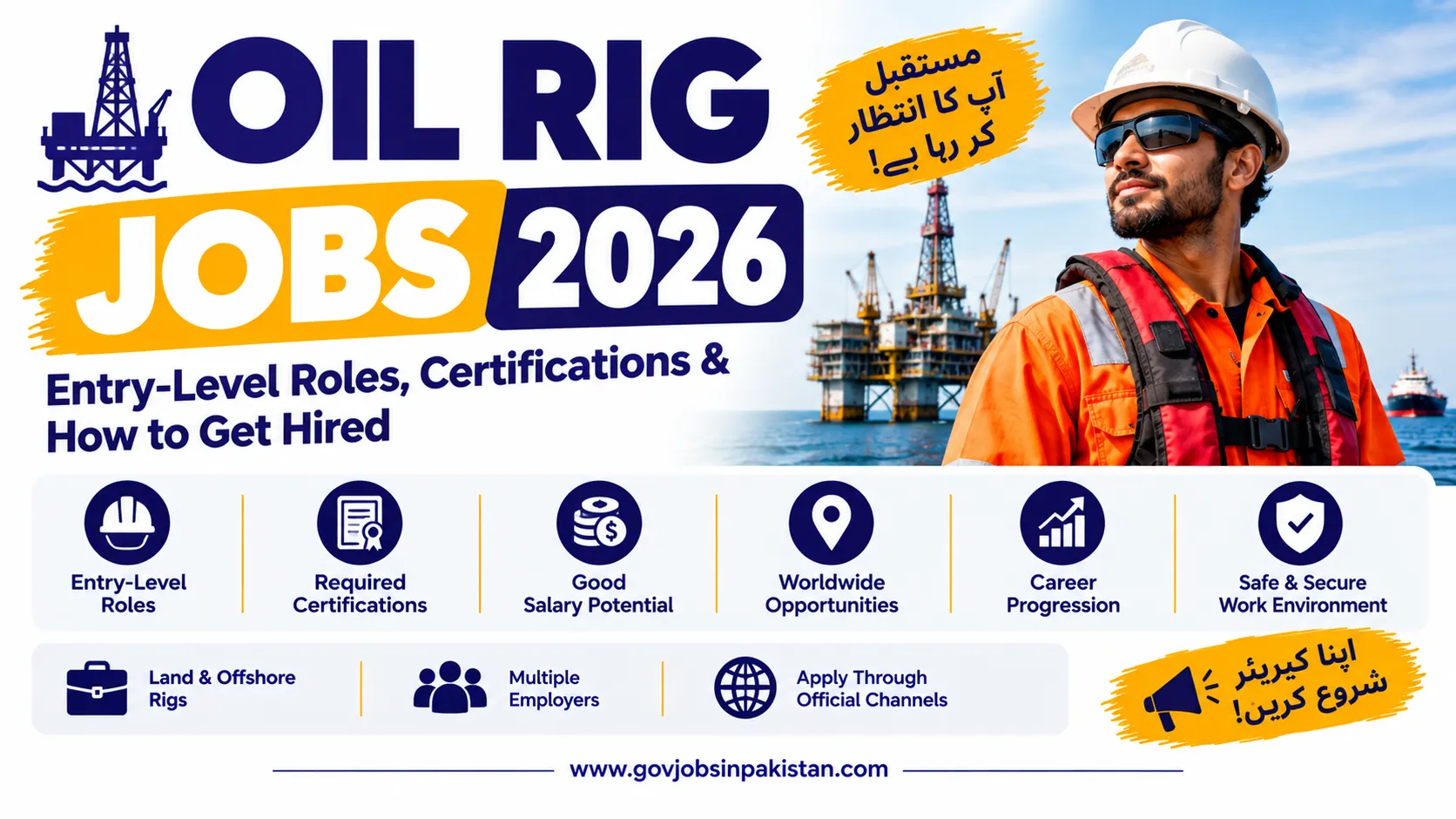

Oil rig jobs cover a wide range of roles on both land-based and offshore drilling operations, from entry-level positions requiring no prior experience to specialized technical and supervisory roles built up over years. This matters to job seekers because, unlike a single recruitment drive, the path into this industry follows a fairly consistent pattern across employers worldwide — the right certifications and a realistic understanding of the work matter more than a specific job posting’s deadline.
Quick Facts
| Detail | Information |
|---|---|
| Industry | Oil and gas exploration and production — land-based and offshore drilling rigs |
| Entry-level roles | Roustabout, Floorhand/Roughneck, Deckhand, Derrickman, Motorman, Cook |
| Typical career progression | Roustabout → Floorhand → Derrickman → Assistant Driller → Driller → Toolpusher/Rig Manager |
| Minimum age | Typically 18 years old, though this varies by employer and country |
| Education requirement (entry-level) | Usually a high school diploma or equivalent — a college degree is generally not required to start |
| Key certifications (offshore) | BOSIET (Basic Offshore Safety Induction and Emergency Training), HUET (Helicopter Underwater Escape Training), a valid medical fitness certificate (e.g., OGUK or equivalent) |
| Key certifications (land rigs, common in the US) | H2S training, RigPass/SafeLand — generally less extensive than offshore requirements |
| Application Method | Directly through company career pages, oil-and-gas-specific job boards, or specialized recruitment/staffing agencies |
| Typical entry-level salary | Roughly $50,000–$60,000/year for roles like roustabout, rising with experience and role progression |
| Where to search | Company career pages, Rigzone (industry-specific job board), and staffing agencies such as Airswift and NES Fircroft |
Important: Pay, certification requirements, and hiring processes vary significantly by country, company, and whether the role is onshore or offshore. Always confirm the exact requirements and legitimacy of any specific job posting or recruiter before paying for any certification or providing personal/financial information.
What Does Oil Rig Work Involve?
Oil rig work takes place on land-based drilling rigs and offshore platforms, ranging from small onshore operations to large deepwater installations. Crews typically work on a rotational schedule — often stretches of consecutive days on-site (sometimes weeks at a time for offshore roles) followed by an extended period off — with shifts commonly running up to 12 hours.
The work is physically demanding and takes place in environments involving heavy machinery, challenging weather, and remote locations, particularly for offshore roles reached by helicopter or supply vessel. Because of this, safety is treated as central to the role: crews follow strict protocols, conduct regular drills, and must be prepared to respond to emergencies.
Almost everyone in the industry starts at the bottom of the rig hierarchy in physically demanding, hands-on entry-level roles, then progresses into more specialized and supervisory positions as they gain experience and additional certifications.

Entry-Level Roles You Can Pursue With No Prior Experience
| Role | What It Involves |
|---|---|
| Roustabout | General labor — inspecting, cleaning, and maintaining drilling equipment; often the most common starting point |
| Floorhand (Roughneck) | Assists with daily rig floor operations, including handling pipes and equipment, and collecting samples |
| Derrickman | Assists the driller by guiding pipes and measuring mud density during drilling |
| Deckhand | Supports operations on offshore platforms/support vessels |
| Motorman | Maintains and operates rig engines and mechanical systems |
| Cook | Prepares meals for the rig crew — a route in for those with prior vocational/culinary training but no drilling experience |
From these starting points, workers typically progress toward roles like Assistant Driller, Driller, and eventually Toolpusher or Rig Manager, or move into specialized tracks such as Maintenance (Motorman → Mechanic), Marine (Able Seaman → Crane Operator/Barge Control), or HSE (HSE Technician → HSE Advisor).
Certifications and Training
For offshore roles specifically:
- BOSIET (Basic Offshore Safety Induction and Emergency Training): covers helicopter safety, sea survival, and fire response — typically a 3-day course, commonly costing USD 900–1,800, and must be refreshed roughly every 4 years via a shorter FOET (Further Offshore Emergency Training) course
- HUET (Helicopter Underwater Escape Training): often included within BOSIET, or available as a standalone 1-day course (roughly USD 400–900)
- Medical fitness certificate: commonly an OGUK certificate or an equivalent recognized medical clearance, confirming fitness for offshore work
- Well control certification (IWCF or IADC): relevant for more advanced drilling roles, covering wellbore pressure management and blowout prevention, offered at multiple levels from basic awareness to supervisory
For land-based rig roles (common in regions like the US):
- H2S (Hydrogen Sulfide) safety training
- RigPass or SafeLand — general industry safety orientation courses, typically less extensive and less costly than offshore certifications
Important: These certifications (particularly OPITO-approved offshore safety courses) typically expire after a set period (often 4 years) and must be renewed to remain compliant — factor this into your planning if you’re already working in the industry.
Salary Expectations
Reported figures suggest entry-level roles like roustabout can earn roughly $50,000–$60,000 per year, varying by location, employer, and whether the role is on land or offshore (offshore roles often carry allowance uplifts over land equivalents). With experience, some sources report workers reaching $80,000–$100,000 after around 5 years, as they progress into more skilled and supervisory roles. Exact pay varies significantly by company, country, and contract terms — treat any specific figure as indicative rather than guaranteed, and confirm compensation directly with the employer or agency for a specific role.
How to apply Get Hired: Step by Step
- Identify a suitable entry-level role that matches your current skills and background (roustabout, floorhand, deckhand, or a trade-specific route like cook or trainee technician).
- Meet the basic requirements — typically being at least 18 years old, holding a high school diploma or equivalent, and being able to commit to rotational shift work.
- Consider starting on land-based rigs first if you’re new to the industry, since these generally require less extensive (and less costly) certification than offshore roles.
- Complete relevant safety training and certifications — H2S/RigPass for land rigs, or BOSIET/HUET plus a medical fitness certificate if you’re targeting offshore work.
- Prepare a resume/CV highlighting relevant transferable skills (construction, mechanical work, military experience, or other physically demanding/technical backgrounds), your certifications, and your availability for rotational work.
- Register with specialized recruitment agencies — firms like Airswift and NES Fircroft focus specifically on oil and gas placements and have established relationships with major operators and contractors.
- Monitor industry-specific job boards such as Rigzone, alongside general job platforms and individual company career pages.
- Network within the industry — a referral from someone already working offshore can significantly improve your chances, since many entry-level positions fill quickly.
Common Mistakes to Avoid
- Paying for expensive advanced certifications before securing any offer — some companies sponsor training for new hires, so research this before spending on courses you might not need yet.
- Applying only to offshore roles as a complete newcomer — starting on land-based rigs is often a more accessible route in, requiring less extensive training.
- Letting safety certifications lapse — OPITO-approved courses like BOSIET typically expire after about 4 years and must be refreshed.
- Ignoring recruiter legitimacy checks — the oil and gas industry has a documented history of fake recruiter scams; treat any request for upfront payment to “secure” a job offer as a major red flag.
- Underestimating the physical and lifestyle demands — long rotational shifts, remote postings, and physically demanding work are the norm, not the exception, especially at entry level.
- Submitting a generic CV — tailoring your resume to highlight safety-consciousness, physical fitness, and any relevant technical or military background improves your chances significantly.
FAQs
1. Do I need a college degree to get an oil rig job? No — entry-level positions like roustabout and floorhand typically only require a high school diploma or equivalent; a degree becomes more relevant for engineering and specialized technical/supervisory roles.

2. What is the easiest entry-level oil rig job to get? Roustabout and floorhand (roughneck) are commonly cited as the most accessible starting points, since they require no prior drilling experience.
3. What certifications do I need for offshore oil rig jobs? Commonly BOSIET, HUET, and a valid medical fitness certificate (such as OGUK). Land-based rig roles typically require less extensive training, such as H2S and RigPass/SafeLand.
4. How much do oil rig jobs pay? Entry-level roles are commonly reported around $50,000–$60,000 per year, with potential to reach $80,000–$100,000 after several years of experience, though this varies significantly by company, country, and role.
5. How old do you have to be to work on an oil rig? Typically 18 years old at minimum, though this can vary by employer and jurisdiction.

6. How long does BOSIET certification last? OPITO-approved offshore safety certificates like BOSIET are typically valid for about 4 years and must be refreshed via a shorter refresher course (FOET) before expiry.
7. Should I start on a land rig or an offshore rig? Many industry guides recommend starting on land-based rigs first, since they generally require less extensive (and less costly) safety certification than offshore platforms.
8. What is the typical career progression on an oil rig? Commonly: Roustabout → Floorhand → Derrickman → Assistant Driller → Driller → Toolpusher/Rig Manager, with alternate tracks in maintenance, marine operations, or HSE.
9. How do I find legitimate oil rig job openings? Through company career pages, industry-specific job boards like Rigzone, and established recruitment agencies such as Airswift or NES Fircroft — be cautious of unsolicited offers requesting upfront payment.

10. Is oil rig work dangerous? It involves inherent risks due to heavy machinery, remote locations, and challenging weather, which is why safety training, drills, and strict protocols are central to how rigs operate.
11. Can I get an oil rig job with no experience at all? Yes — roles like roustabout, floorhand, and cook are specifically accessible to those without prior drilling experience, provided you meet basic age, fitness, and safety training requirements.
12. Do oil companies pay for training and certifications? Some larger companies do sponsor training to help new hires upgrade their licenses and skills, though this varies by employer — it’s worth clarifying before paying out of pocket for advanced certifications.
Final Words
Oil rig jobs offer an accessible entry point into a well-paying industry, even without a college degree or prior experience, through roles like roustabout, floorhand, and deckhand. The path in generally involves choosing between land and offshore work, completing the relevant safety certifications (H2S/RigPass for land, BOSIET/HUET plus a medical certificate for offshore), and applying through legitimate channels — company career pages, industry job boards like Rigzone, or established recruitment agencies such as Airswift and NES Fircroft. Since there’s no single recruitment cycle for this industry, the best approach is to get certified, build a targeted resume, and apply consistently across multiple legitimate sources.

Iqra Rasheed
 Verified Author
is a Jobs & Career Content Specialist at freejobspk.com, providing clear and source-based information about government jobs, recruitment updates, eligibility, deadlines, and application procedures in Pakistan.